
Water Bankruptcy – When the Taps Run Dry

Cape Town, Sana’a, São Paolo, Jakarta, Mexico City. These are just a handful of cities that in the past several years or so have faced a looming ‘day zero’ water scarcity crisis.
Day zero is when a municipality can no longer supply drinking water to its residents and the taps run dry.
Now Tehran, Iran is the on the brink of joining the 'day zero' list. Much of the Middle East is enduring severe drought conditions. Countries like Iraq, Turkey and Jordan are facing some of the worst droughts in decades, with significant reductions in rainfall, shrinking water supplies, and increasing temperatures driving prolonged dry spells. Drought conditions are also severely impacting food production and crop yields.
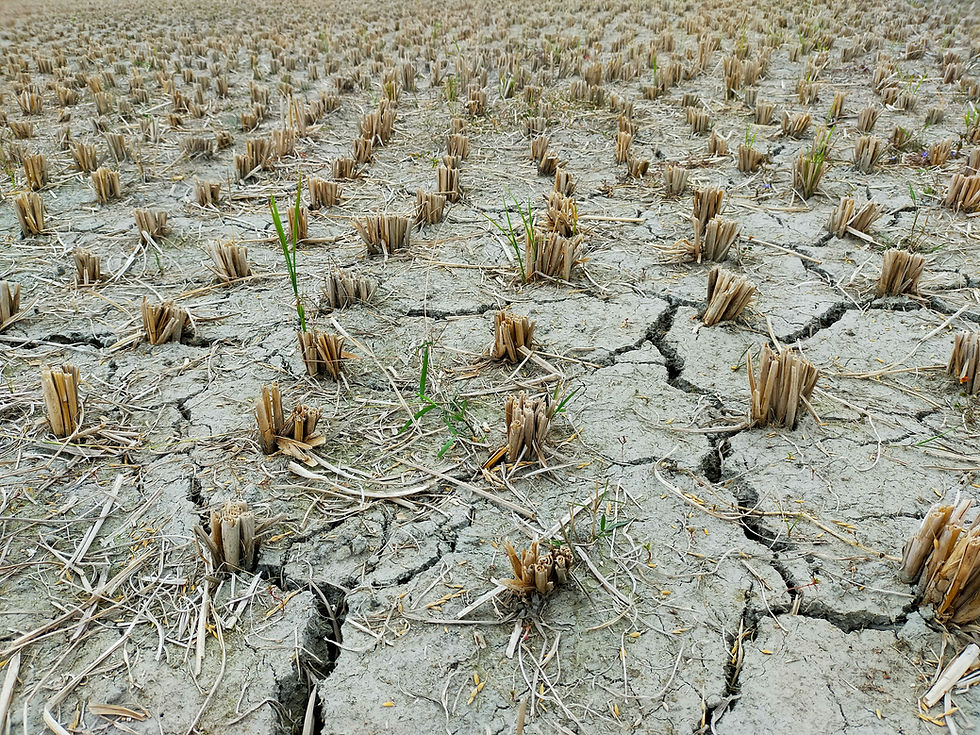
But it is the water crisis in the mega city of Tehran that is capturing current headlines. As well it should, as President Masoud Pezeshkian announced that if it doesn’t rain by the end of November, "we’ll have to evacuate Tehran.”
Or, better yet, simply move the capital. That may be easier said than done; rainfall is down by about 85 percent nationwide, creating the worst drought the country has seen in 60 years. The Tehran metropolitan region has a population of some 17.8 million people – what happens to them? If they are forced to evacuate, where would they go?
The Drivers of the Crisis
Iran is a high-risk country for enduring severe effects of climate change. Over 82 percent of the country is arid or semi-arid, and Iran is sixth on the list of countries most prone to natural disasters.
While it would be easy to say this 'day zero' is due to climate change, much of the crisis is also a result of poor resource management, unsustainable agricultural practices, century-old water infrastructure, population pressures and sanctions.
Professor Kaveh Madani, director of the United Nations University's Institute for Water, Environment and Health said, "If you look at the situation of Iran, you see not only they have exhausted [their] checking account, but also their savings account, and for years they have spent more than what they could afford," he said.
"The argument here is that the water bankruptcy problem as a whole has been the underlying problem, and it was going on for many years now.
Water shortages have already triggered migration from rural areas to cities, triggered periodic protests, and numerous cities have had power outages, as hydropower and cooling systems falter during peak heat.

Warning Signs
Tehran, like other cities enduring a potential water catastrophe, should’ve known this could happen. Scientists have been warning since at least 2008 that unchecked groundwater pumping for the city and for agriculture was rapidly draining the country’s aquifers.
If the capital is moved to the southern coast of Iran, as is being discussed, it could cost more than $100 billion. Incredibly, this region is known for having a harsh climate. It sounds like they are just kicking the problem to another place, damn the consequences.
Rain Dance Anyone?
Rather than accept that the drivers of this water crisis are caused by humans and unsustainable policies and actions, leaders choose to instead grasp at straws. The Iranian government is hoping autumn rains appear soon. Or that technology, such as cloud seeding, will save them. Human hubris and exploitation of finite resources has brought Tehran and many other cities to the edge of collapse.
Other cities have escaped the 'day zero' of running out of water. Tehran may get lucky and actually escape it this time. But a day of reckoning is coming for modern civilization. A temporary reprieve is just that - temporary - unless real changes are implemented. Extreme water rationing and providing emergency water supplies are unsustainable short-term solutions. Long-term answers could be efficient water management/water reuse and conservation. But in a climate-stressed world, most solutions, long or short, won't be easy.
You can bet that Tehran won't be the last city to face running out of water in the next few years. The costs of addressing water crises are extremely high, but the price of doing nothing - or simply hoping something good happens - could result in tremendous human suffering.


Comments