
How Community Conversations Are Changing Lives in Uganda

In many communities across Kampala, Uganda, conversations about sexual and gender-based violence (SGBV), teenage pregnancy, and reproductive health are often avoided or misunderstood. But something powerful is happening now - people are starting to talk about these issues.
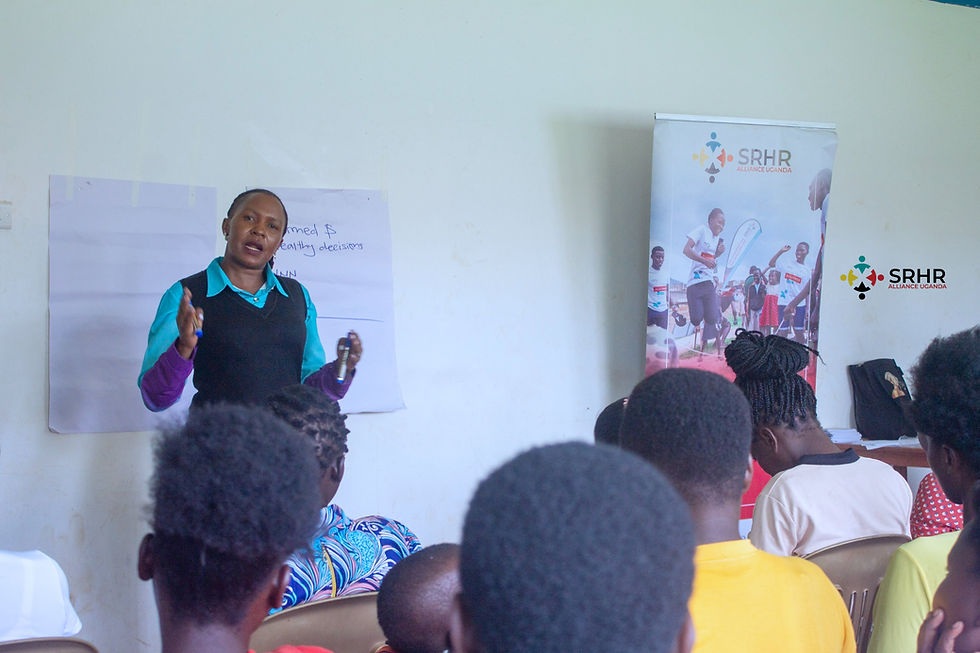
In March 2026, Uganda Youth and Adolescents Health Forum started a series of community “fireside chats” that brought together young people, parents, leaders, and service providers in places like the Kawempe and Rubaga divisions of Kampala. These were not formal meetings with long speeches. Instead, they were open, honest conversations where people could share experiences, ask questions, and learn from each other.
At one of the sessions in Kawempe, over 40 participants gathered in a simple community space. Young women, men, and local leaders sat side by side, discussing real issues affecting their lives, such as violence in homes, early marriages, and the pressure young people face every day.
One of the locals warned against normalizing relationships with underage girls and reminded the community that such actions are not only harmful but illegal. He emphasized that protecting young people is everyone’s responsibility.
In Rubaga, a similar conversation unfolded. Here, community leaders encouraged young people to take charge of their health and to report cases of abuse. Many participants admitted that they often don’t seek help, not because services don’t exist, but because of fear, stigma, or simply not knowing where to go.
One of the most impactful activities during these chats was something called a “power walk.” Participants stepped into different roles a teenage mother, a boda boda (motorbike) rider, or a schoolteacher, and experienced how society treats people differently. It opened eyes. It helped people understand how inequality and power imbalances can lead to violence and silence.

What stood out most was how much young people want to be heard. Many shared that health facilities can feel unwelcoming, with long waiting times, judgmental attitudes, and a lack of privacy, that push them away. These are real barriers that need to be addressed if we are serious about improving health outcomes.
Despite the challenges, there is hope. Community members are stepping up. Local champions are continuing these conversations beyond the meetings. Plans are underway to use radio and other platforms to spread accurate information and break harmful myths.
These fireside chats remind us that change doesn’t always start in big conference rooms. Sometimes, it begins in small community spaces, with people sitting together, listening, and speaking honestly. Because when people understand the issues, they begin to act. And when communities act, real change becomes possible.
"Sexual and gender-based violence steals more than safety from young people, it steals their future. But in communities where people come together to speak openly, listen, and learn from each other, that silence begins to break. Because silence protects the perpetrator, not the survivor, and through honest conversations like these fireside chats, we turn pain into power, bridge the gap between fear and action, and start taking that future back" - Norah Nakyegera, advocacy and campaign officer, Uganda Youth and Adolescents Health Forum.



Comments